Can a battery run a sump pump during a power outage?
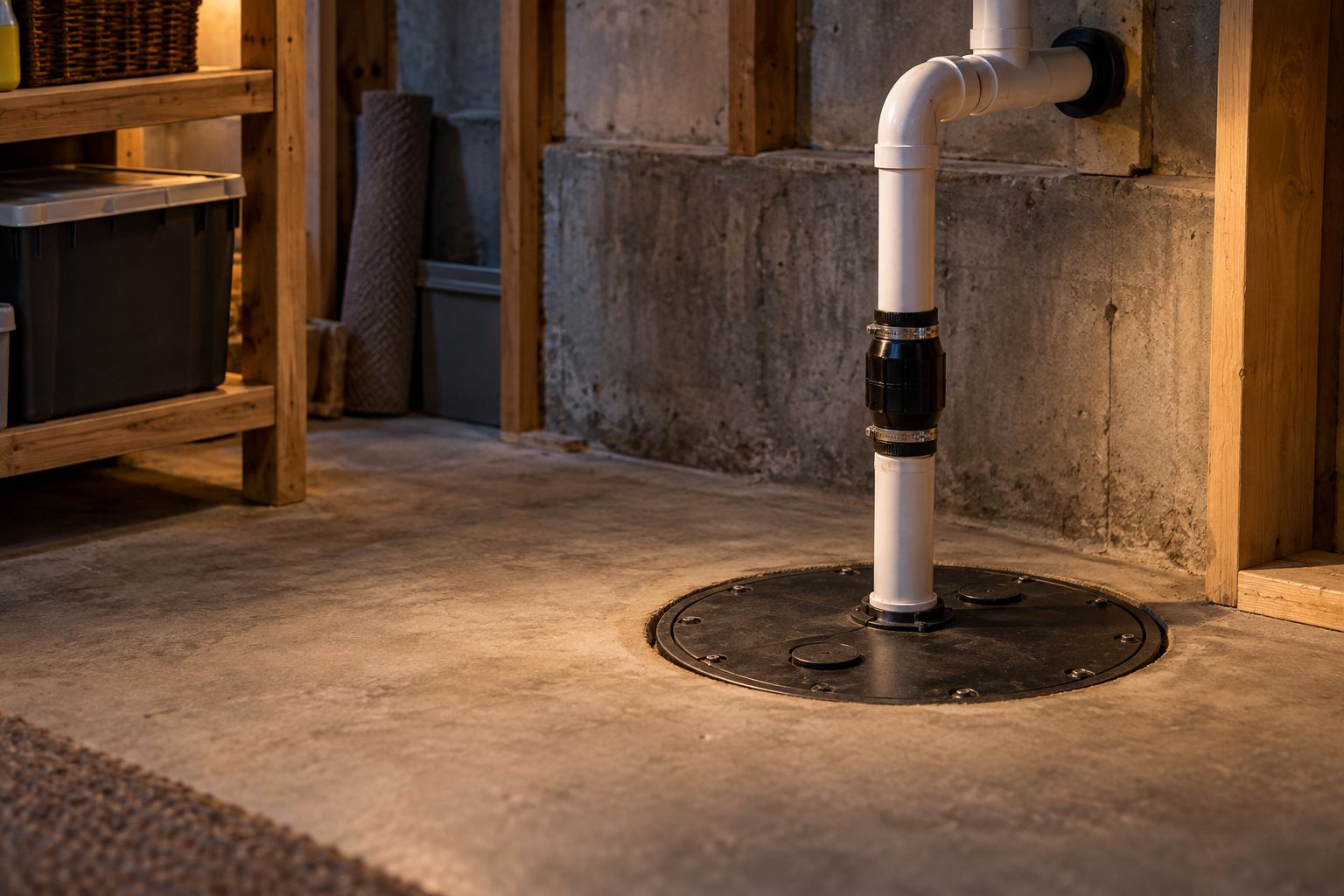
A sump pump only runs when water comes in, so the question isn't how many days, it's how many hours of pumping. Its startup surge is what trips up smaller stations.
We earn a commission if you buy through our links. It never changes our picks. Details
The short answer
Yes, if it can start the pump. A 1/3–1/2 HP sump pump draws about 800–1,050 W running and 2,100–3,250 W for a moment as it starts. A 2,000 Wh power station gives about 2 hours of pumping; a 3,840 Wh unit about 3–4 hours. How many days that lasts depends on how often your pump runs.
- 800 W
A 1/3 HP sump pump running. About 2,100 W to start.
Source: EWEB- 1,050 W
A 1/2 HP sump pump running. About 3,250 W to start.
Source: EWEB- 3×
The starting factor a utility guide uses for pump motors.
Source: DTE Energy
Why is a sump pump harder to back up than it looks?
Two reasons. First, the motor needs a burst of power to start, often about 2½ to 3 times its running watts. The station’s surge rating has to cover that burst on top of anything else that’s running. All three units below list a surge rating of 4,800 W or more, so each can start a 1/2 HP pump on its own.
Second, a sump pump runs in short cycles, and how often depends on rain, snowmelt and the water table. A dry week might need almost nothing. A spring storm can keep it cycling all night. That’s why we size in hours of pumping, not hours of outage.
How long does each size run a sump pump?
Pumping time is the battery divided by the pump’s running watts. The last two columns show how long that lasts if the pump runs a total of 1 or 2 hours a day. Those are example storm days, not a typical figure, so time your own pump in the next heavy rain.
| Unit | Capacity | Hours of pumping | If it pumps 1 hr a day | If it pumps 2 hrs a day |
|---|---|---|---|---|
| EcoFlow DELTA 2 Max | 2,048 Wh | About 2 | 40–52 hrs | 20–26 hrs |
| Jackery Explorer 2000 Plus | 2,042 Wh | About 2 | 40–52 hrs | 20–26 hrs |
| Anker SOLIX F3800 | 3,840 Wh | About 3–4 | 3–4 days | 37–49 hrs |
Manufacturer spec capacity · Our estimate runtime, using 85% of capacity and a 1/2 HP (1,050 W) to 1/3 HP (800 W) pump, running watts from EWEB. Pump only. How we calculate
To time your pump, count how many times it starts in an hour during heavy rain and how many seconds each run lasts. Ten 30-second runs an hour is 5 minutes of pumping an hour, or 2 hours a day if the rain keeps up.
Battery-backup sump pump or a power station?
A battery-backup sump system is a second, 12 V pump that sits in the same pit with its own battery and charger. It turns on by itself during an outage, and also when the main pump fails, its float sticks, or water comes in faster than the main pump can move it (Basement Watchdog). You don’t have to be home. The catch is that it moves less water than most main pumps, and its battery wears out and needs replacing.
A power station runs your existing pump at full strength and can run other things too. It only helps if the pump is already plugged into it when the power goes out, so it needs a pass-through or UPS mode. The F3800 lists a switch time under 20 ms (Anker); check the spec sheet for any other unit. Keep the station off the floor and away from the pit.
Which setup fits your basement
- You travel or sleep through storms
- A dedicated 12 V backup pump. It switches on without you, and it also covers a stuck float or a failed main pump.
- Short outages, moderate water
- A ~2,000 Wh station on pass-through gives about 2 hours of pumping, or about 40–52 hours if the pump runs an hour a day.
- Long outages or a high water table
- A ~3,800 Wh unit, an expansion battery, or solar to recharge by day. For days of heavy pumping, read battery vs. generator.
Can a power station run a well pump?
A well pump is a bigger job for three reasons.
- Voltage. Many submersible well pumps run on 240 V; the nameplate often says 230 V, like this Franklin Electric 3/4 HP motor. Most portable stations put out 120 V only. The Anker SOLIX F3800 offers 120/240 V output (Anker).
- Startup. A utility guide lists a 1/3 HP well pump at 1,000 W running and 3,000 W to start (EWEB), and a 3/4 HP pump at 1,500 W running with a starting factor of 3, or 4,500 W (DTE Energy). The F3800’s 9,000 W surge rating covers both.
- Wiring. Well pumps are hard-wired, with no plug. Running one from a battery means an inlet or transfer switch installed by an electrician.
Once it’s connected, the F3800 gives about 3 hours of pumping for a 1/3 HP pump and about 2 hours for a 3/4 HP pump, using 85% of capacity. Your pressure tank stretches that, since the pump only runs when the tank drops.
Three units that can start a sump pump
Specs are the manufacturer's. Pumping times are our estimate for a 1/3–1/2 HP sump pump only.
Lightest to carry downstairs
EcoFlow DELTA 2 Max
About 2 hours of pumping (1/3–1/2 HP pump) Our estimate
2,048 Wh · 2,400 W (4,800 W surge) · LFP, 3,000 cycles · about 50 lb Manufacturer spec
About 2 hours of pumping for a 1/3–1/2 HP pump, and its 4,800 W surge rating clears both pumps' startup draw.
Trade-off: Its surge rating has the least room to spare of these three for a 1/2 HP pump.
Most surge headroom at 2,000 Wh
Jackery Explorer 2000 Plus
About 2 hours of pumping (1/3–1/2 HP pump) Our estimate
2,042 Wh · 3,000 W (6,000 W surge) · LiFePO₄, 4,000 cycles · 61.5 lb Manufacturer spec
The same pumping time as the DELTA 2 Max, with a 6,000 W surge rating for pumps that start hard.
Trade-off: Heavier for the same capacity, at 61.5 lb.
Longest pumping time, and 240 V for well pumps
Anker SOLIX F3800
About 3–4 hours of pumping (1/3–1/2 HP pump) Our estimate
3,840 Wh · 6,000 W (9,000 W surge) · LFP, 3,000+ cycles · 132 lb Manufacturer spec
About 3–4 hours of pumping, a 9,000 W surge rating, and 120/240 V output for a well pump wired through an inlet or transfer switch.
Trade-off: At 132 lb, getting it down basement stairs is a two-person job.
Make the battery last longer
- Check the pump’s label. Volts × amps gives running watts, which is better than any typical figure.
- Run nothing else big on the station while the pump might start, so the surge has room.
- Test it before storm season. Unplug the pump from the wall, plug it into the station, and pour water into the pit.
- Keep the discharge line clear so each cycle is short.
Common questions
How many watts does a sump pump use?
A utility's sizing guide lists a 1/3 HP sump pump at about 800 W running and a 1/2 HP pump at about 1,050 W. Starting takes more, about 2,100 W and 3,250 W in total. The label on your pump gives volts and amps; multiply them for running watts.
Is a battery-backup sump pump better than a power station?
For the basement alone, a dedicated 12 V backup pump is simpler because it switches on by itself, including when the main pump fails. A power station is more flexible because it can also run the fridge, CPAP or Wi-Fi. Many homes use both.
How long does a sump pump run each day in a storm?
It depends on rain, snowmelt and how high your water table sits, so there's no typical number. Time it during the next heavy rain by counting cycles in an hour and how long each one lasts.
Can a portable power station run a well pump?
Only if it matches the pump's voltage and can start it. Many well pumps run on 240 V, which most 120 V stations can't supply; the Anker SOLIX F3800 offers 120/240 V. A well pump is hard-wired, so it also needs an inlet or transfer switch installed by an electrician.